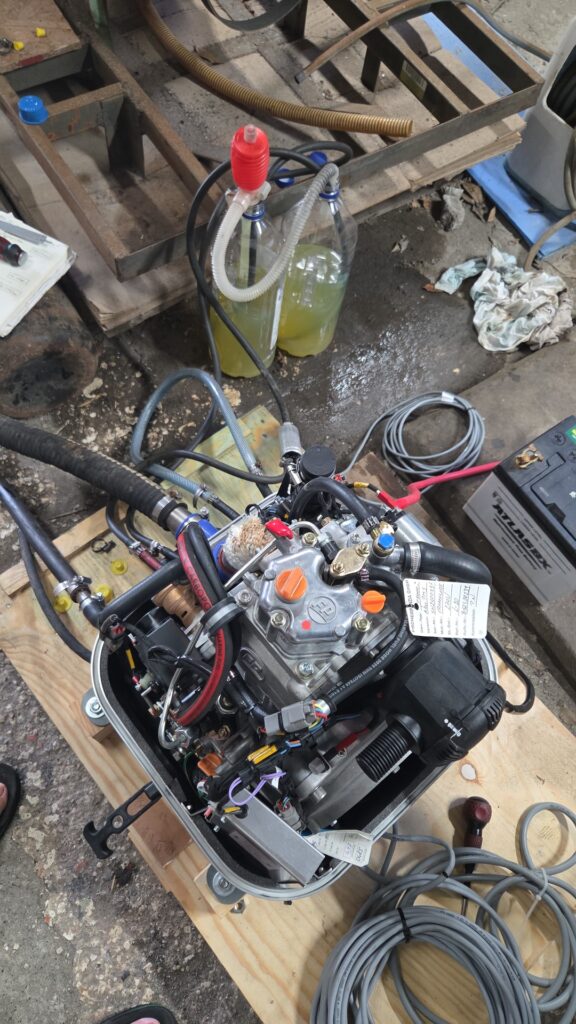
Fischer Panda recommends to test run the genset before building it in.
So we did it. The setup reminded my to an experimental setup during my days in university research. That time, we considered the setup as perfect when it only holds together until the last measurement was done – after that, it can collapse.
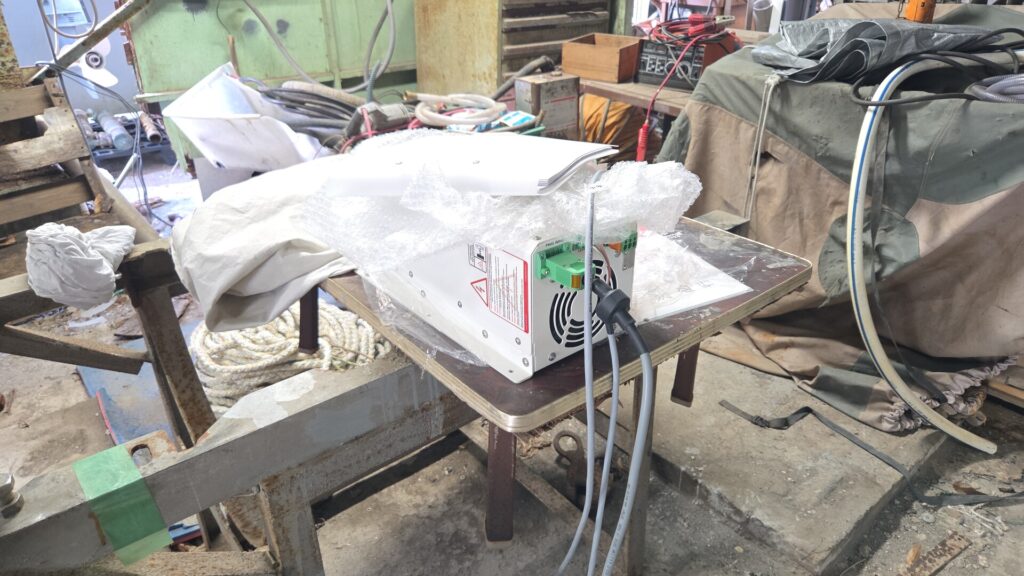
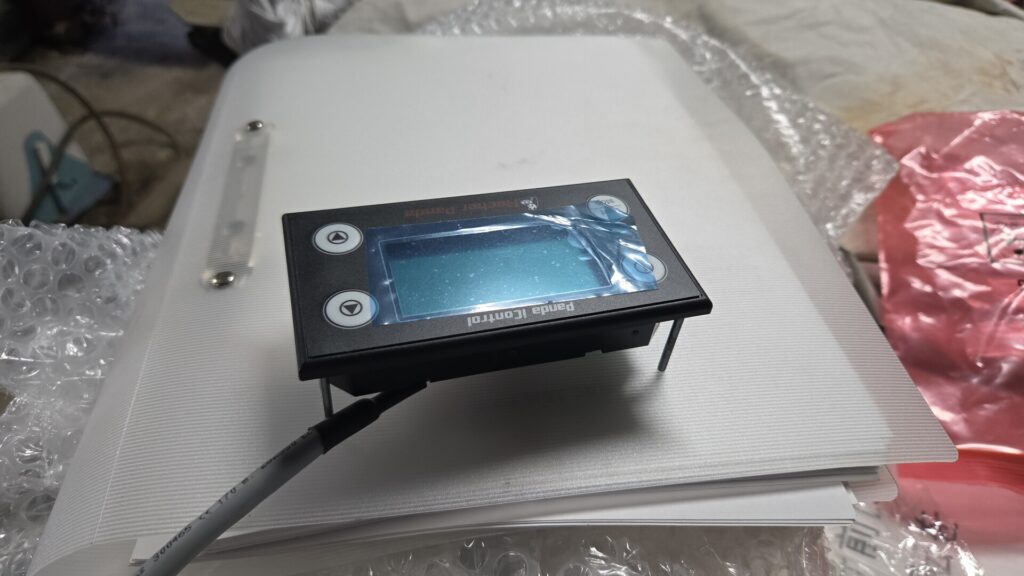
the experimental set-up the inverter with cables connectedconnected control panel connected just laid on to of the inverter
Two old water bottles one with some diesel in it and one for the diesel reflow. A hand siphon pump to pump returning diesel into to bottle which functions as the diesel tank. The electrical fuel pump just somewhere in the fuel feed line and connected to the 12 V power supply from the genset. For the coolant inside the engine, we made just a close circuit with a piece of a hose. As the return line has a smaller diameter we got a lost some coolant because we got a temporary leak. The raw water input, which normally gets sea water was connected to a fresh water line. The exhaust exit of the genset got an old piece of rubber exhaust hose to keep the exhaust fumes and the exciting raw water away from us. The electrical
connections to the inverter were made with the long cables supplied. The same for the control panel. Only the battery cables we used were already made in the length as needed for the installation at MaRe.
Oil check showed the right oil level. Thus, all ready for the final steps. Connection of an old 12 V battery to power the start motor and supply the engine control board. The control panel displayed readiness of the system.
A push of the start button and the engine control board took over, started the fuel pump and a few seconds later the start motor. The diesel engine started and was running fine. Another few seconds later the inverter switched on its green OK-light.
The final test was to see if the inverter delivers 230 V. A multimeter connected showed 230 V. The only thing we could not test was the current from the inverter because we did not have a suitable device for an electrical load.
We considered the test as successful.
As we had only a reduced amount of coolant in the engine, the engine temperature went up after a few minutes and we switched off the genset. Test was completed and the experimental setup held together until the end of the test.
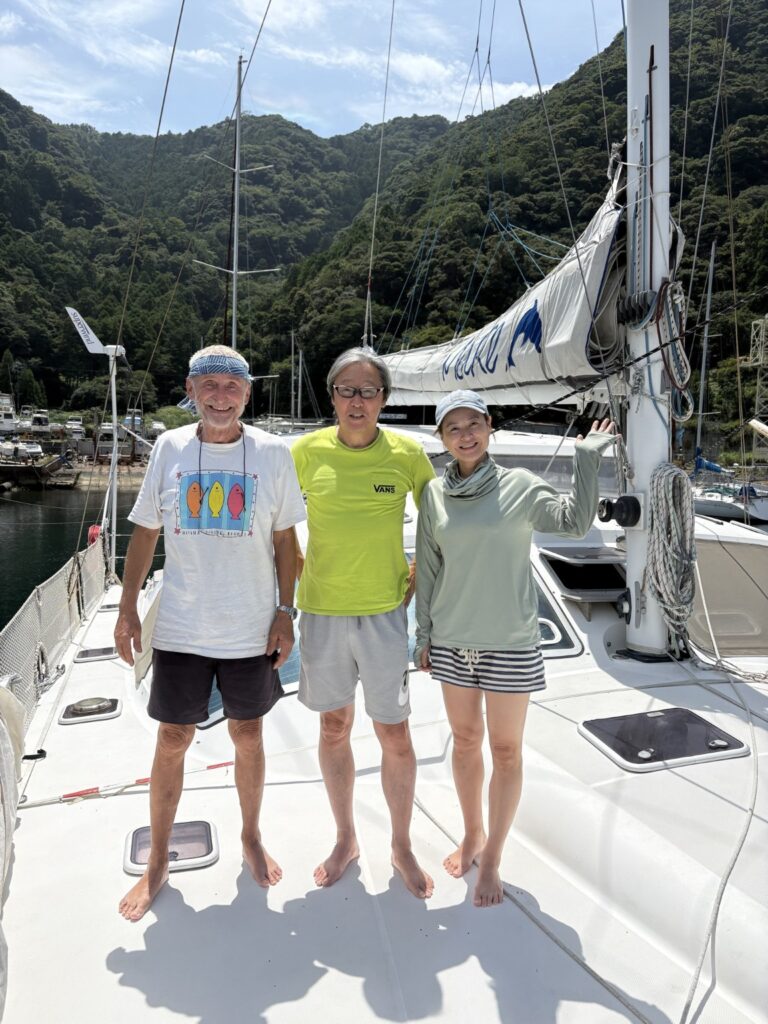
I also met some very nice people here at the Arari Ship Builders pier – the Yoshimuras. They came to MaRe because a catamaran is not that often to be seen in these waters.
with Aiko and Taka at MaRe. The picture is taken by Makiko, Aiko’s sister.
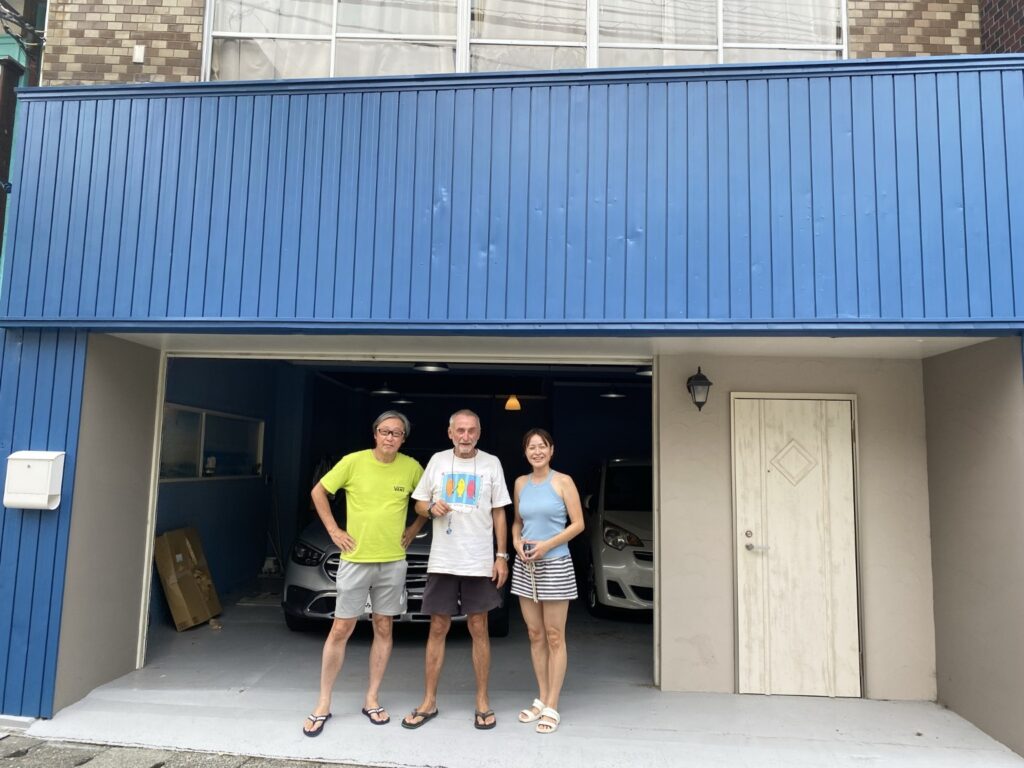
I invited them for a cup of coffee on board of MaRe being in maintenance mode, which means many tool boxes, and many other things are stored temporarily in the cockpit. We had a good time talking about boats and times at sea. At the end I got invited to have lunch with them. Thanks for the delicious meal Michiko, and to all of you for your hospitality and the interesting conversations we had.
with Aiko and Taka Yoshimura on front of their “Arari Hills” summer house. The picture is taken by Makiko, Aiko’s sister.
Hours after arrivai and even on a Sunday, Iwabuchi-san discussed with me the work I want to do with stuff from ABS.Beside this there is plenty to be done for me on my own.Immediately on Monday morning I started disassembling the Onan genset (combination of a diesel engine and a generator). On Wednesday we used the boom as a crane to lift first the diesel engine and then the generator out. I then removed the base plate and cleaned the hole engine room area. Then came the detailed planing on how to install the new Fischer Panda genset and its peripherals. It’s a bit tricky as the connections for exhaust, fuel, coolant, raw water and the electrical connections are just the other way round as at the old Onan genset.Finally I decided to extend the original tubes for exhaust, fuel, fuel return line, raw water and get the extensions under the installation platform to the left side of the genset. For the cables an existing cable duct and the connection to the charger and the control panel can be done using the existing cable from the Onan genset. This saves a lot of work. The waterlock of the Onan genset can be used as well; only a reduction tube to match the diameter of the old exhaust tube with the smaller one of the new exhaust tube is needed. Kikuchi-san will look for a solution.
A bunch of other smaller things are done or work on progress.
One of them is a re-coating of my Rocnan anchor. It will be white now.
And I got now 200 V shore power; a special connection for MaRe.
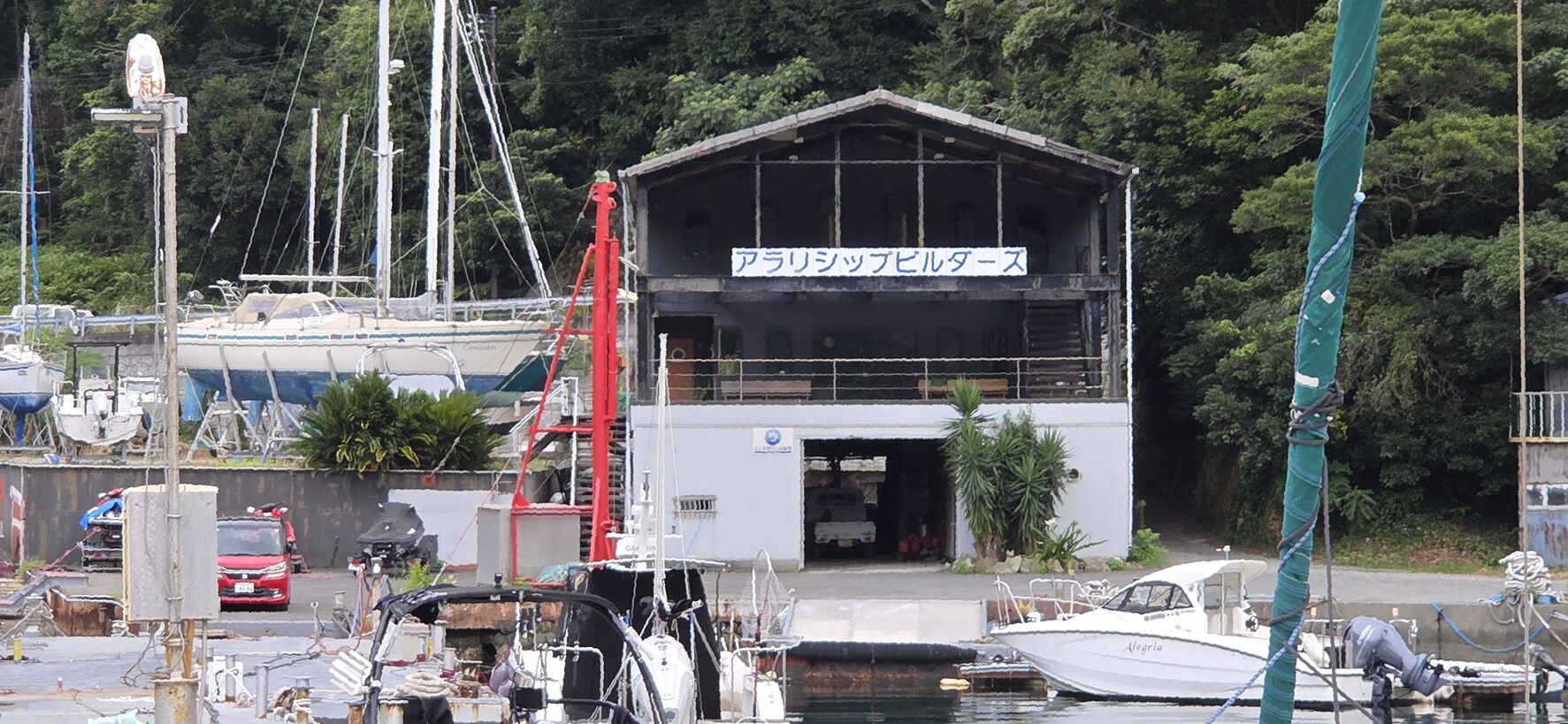
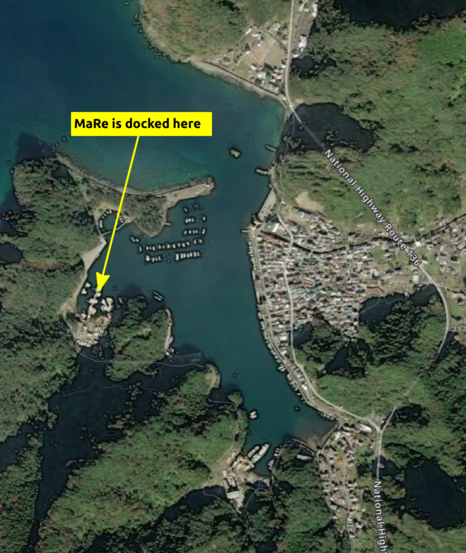
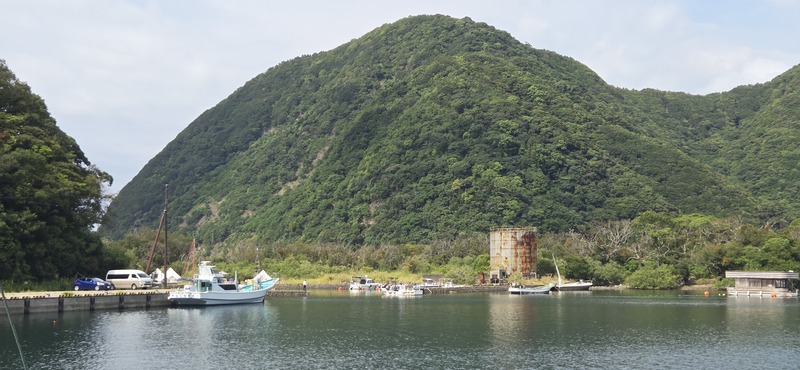
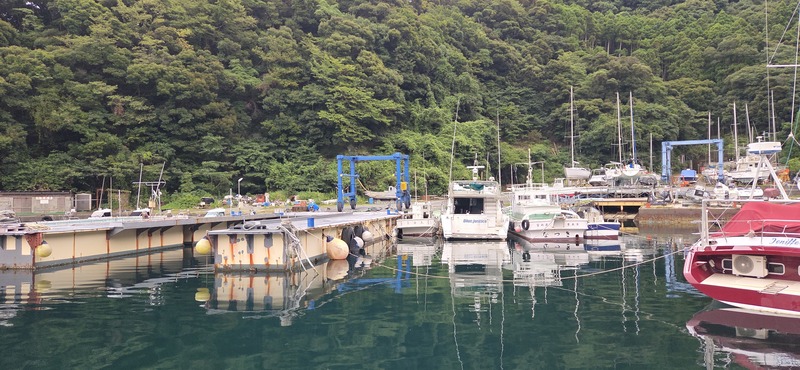
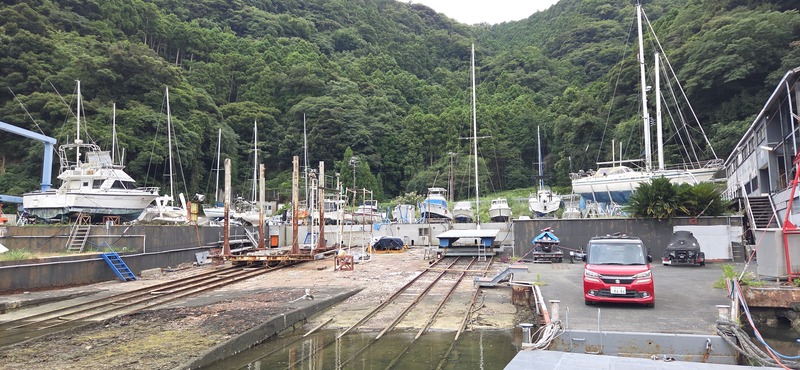
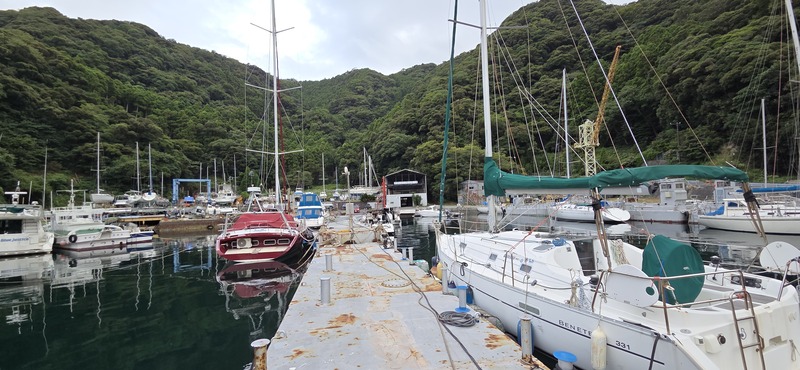
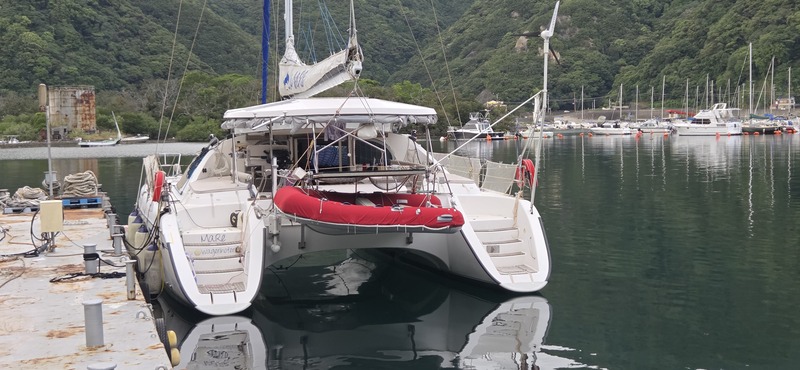
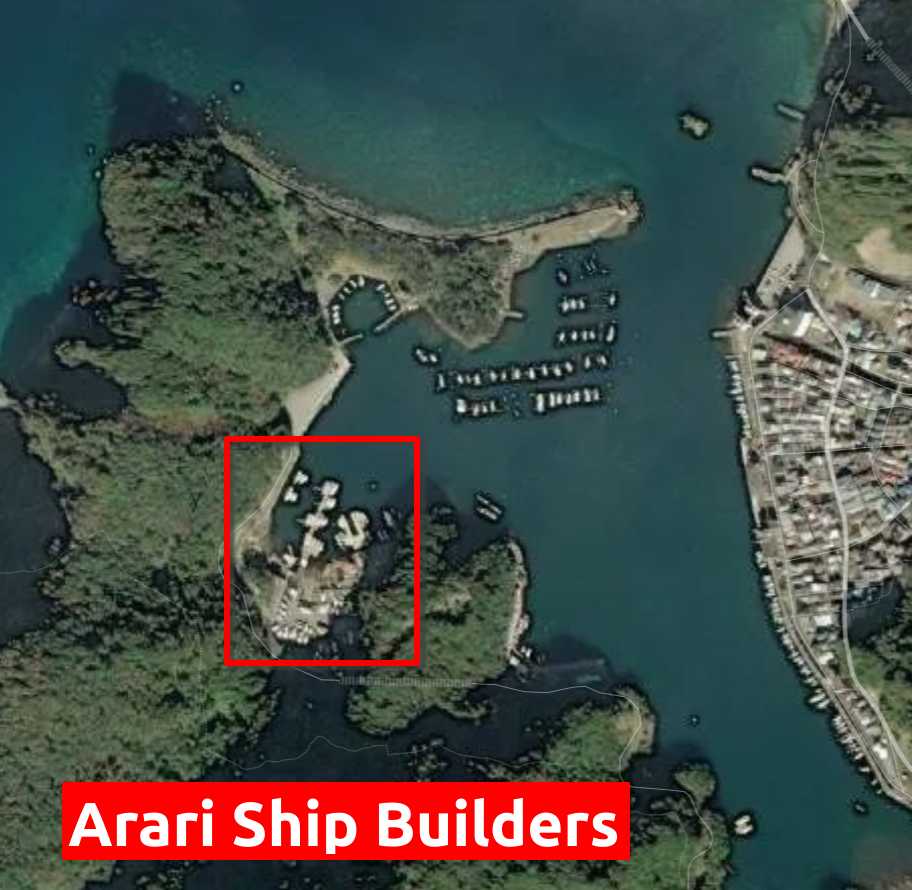
Since 27-July MaRe is now docked at the pier of the Arari Ship Builders (ABS).
MaRe’s location at the pier of the Arrari Ship Builders (source: www.maptiler.com)
I’m am very lucky that my OBM could arrange this place for MaRe. It’s not only the docking place but the owner, Mori-san, also offer me to use a car to travel between Shuzenji Station and the boat yard. Gosh, I’m lucky.
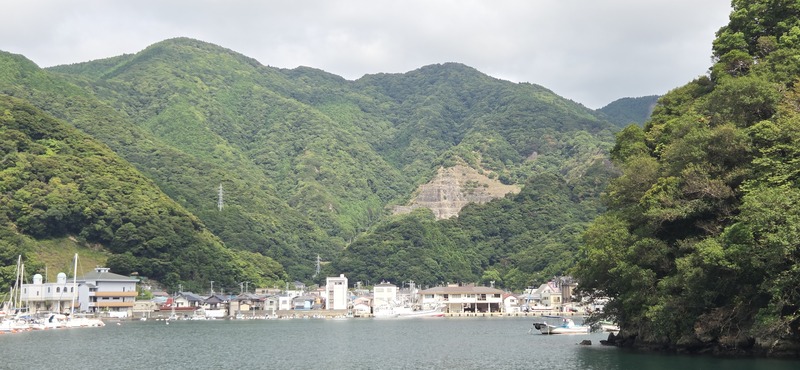
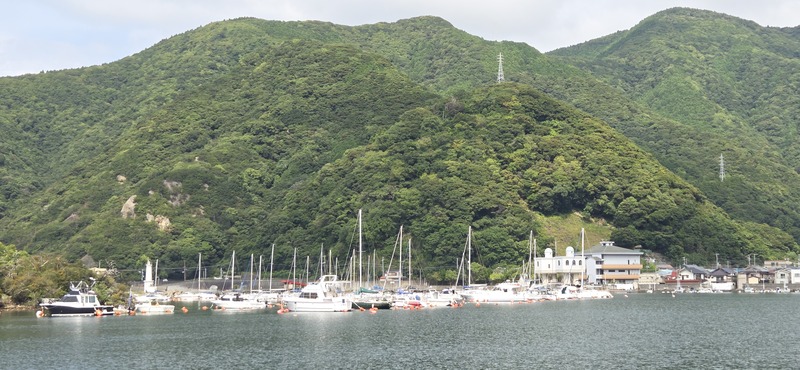
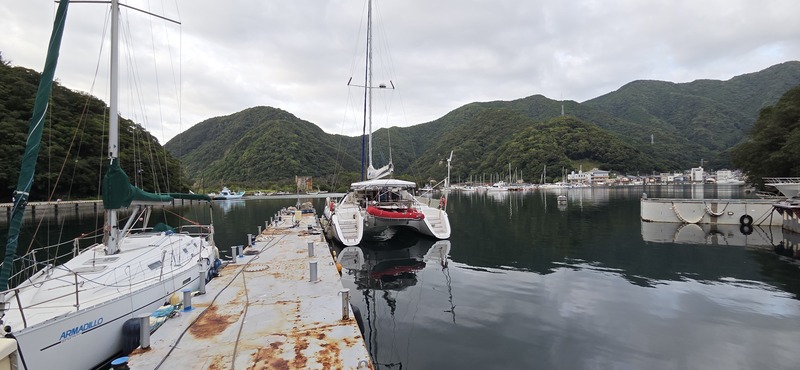
The location is deep inside a small bay and around two corners, so no swell is coming to this place. The mountains around it are so high that there is a good wind protection. A gentle current keeps MaRe most of the time even away from the pier so now chafing of the fenders.The people here, at the boat yard are very friendly and helpful. The right place to prepare her for the return west wards to Europe.
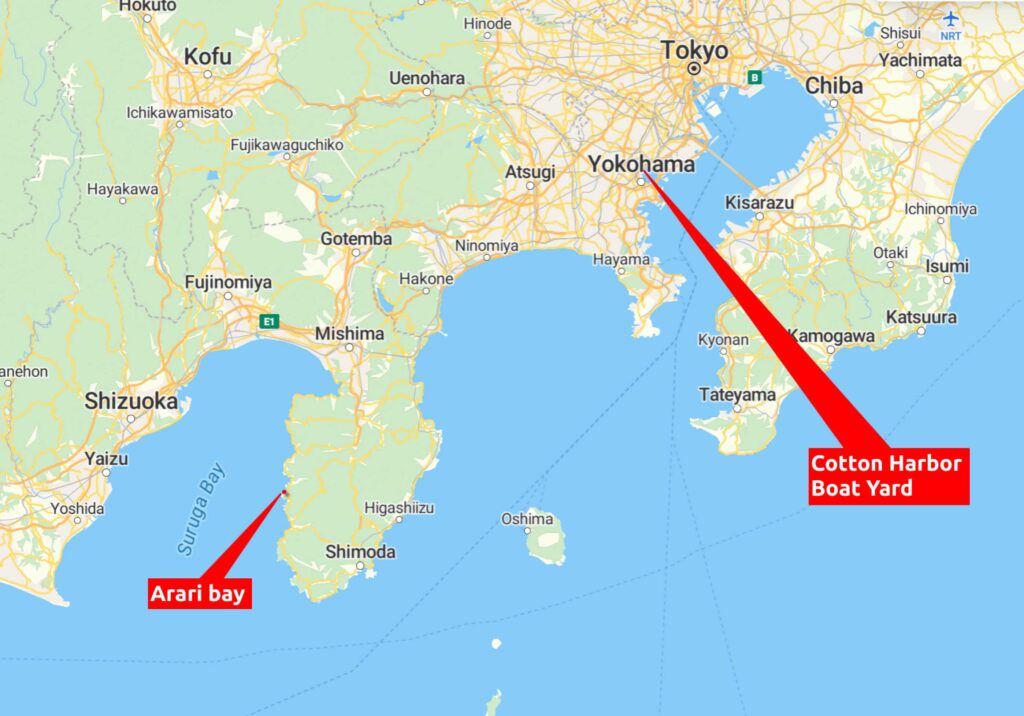
As mentioned before, OBM could, via a friend, arrange for me that I can keep MaRe at a pier of the Arari Ship Builders. There I will do another part of maintenance and repair.
I decided to take the direct route because the wind forecast was more than lousy. The weather models differed too much. I have to consider to use the engines all the 100 NM to the Arari bay.
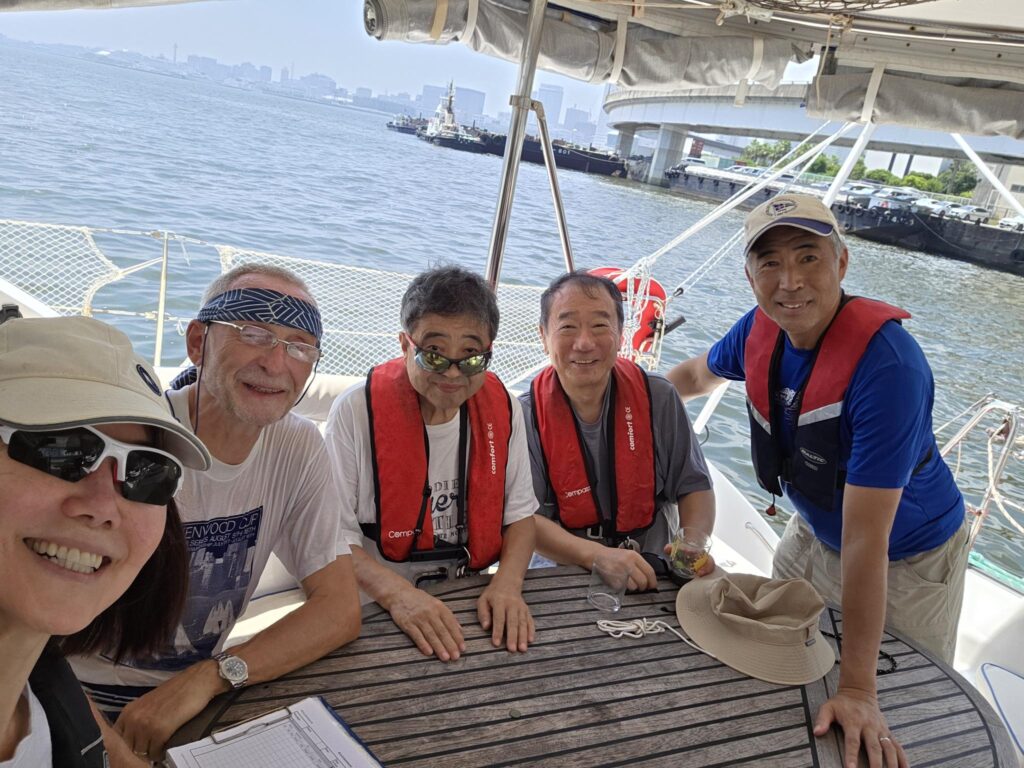
the crew for Yokohama to Arari just before departure
Departure was planned for 1000 – 1100. Beside my normal departure preparations I needed to inform friends as well on what needs to be done etc. Two friends, Sudo-san from my AGFA Japan and Copal days, and Seisaki-san who
joined AGFA Japan after I left for AGFA HQ in Belgium, were the first time on sail boat. So some explanations were needed.
With the third one, Taro-san, I sailed 32 years ago for the last time on “sleeper”, the race boat we crewed together. He definitely needed less explanations although there is quite difference between a 12 m race boat and 14 m cruising catamaran and 32 years is a long time.
OBM stored all the food we brought along and the “omiyage” (a Japanese style gift) we got from the friends.
Then we were ready to cast off the lines. OBM and I went back to the staff of Cotton Harbor Boat Yard for saying good bye and thanked them again for their great support on the sea trial day. Some of this team came to pier to release lines in order I asked them to do. With sufficient fenders at the bow, I pulled MaRe with the PRT engine away form the pier and then turned out into the wide water area of Yokohama harbor.
Lines and fenders were quickly stowed away and we heading SW in the vast Tokyo bay staying clear of the traffic separation scheme for big and very big vessel.
The ECMWF weather model, which is normally the most reliable one, forecasted winds, which should allow us to set the gennaker and sail until the exit of Tokyo bay. However, there was no wind at all. So we used the diesel sails and followed the route toward Tokyo bay’s exit. Everyone got his time on the helm. During the lunch meal OBM prepared, I took over the helm, which means, I used the autopilot and watched only all ships around MaRe. Fortunately there was nothing to be done and I could enjoy my lunch undisturbed.
Then we got out of the bay and the wind came up. First 60 deg AWA, then 70 deg AWA and we discussed already that with 80 – 90 deg AWA we could use the gennaker. For main sail and genoa the wind was too weak. At 80 deg AWA I got nervous, I wanted to sail. So with Taro-san I prepared the gennaker sheets and the gennaker. When all was ready we had already 90 deg AWA. OBM took the helm and steered MaRe to 150 deg AWA, a
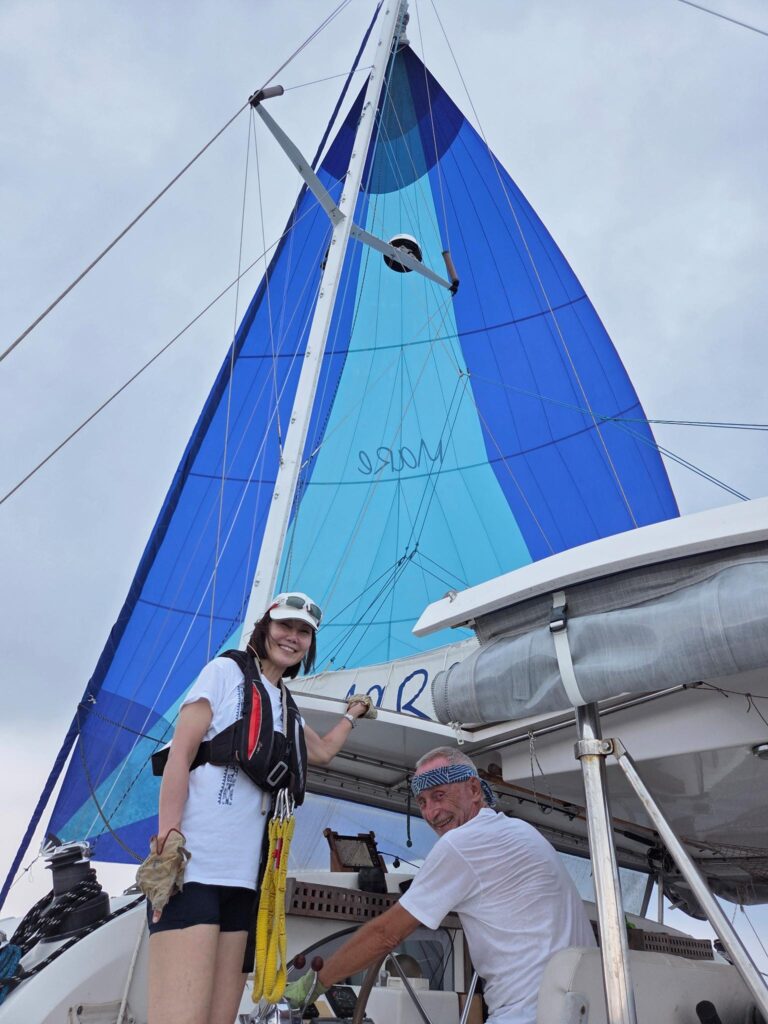
the Big Blue pulls MaRe
pretty good gennaker launch wind angle. Taro-san took position at the STB winch to trim the gennaker roughly, and I hoisted the sock. The Big Blue was flying. Engines off. The only sound was the one of the wake. After trimming it in more details, we made a bit more than half the TWS as STW. Not bad.
For Taro-san it was a nostalgic feeling after 32 years without sailing. For the other two, it was the first experience being pulled by a sail through the sea and both enjoyed this experience.
When the wind got too strong for the gennaker, we changed sails to MaRe’s “nightgown”, main sail the reef 2 and the full genoa. With this we went trough the night. Because there was so much traffic from and toward Tokyo Bay, there was not much sleep for me.
There was also a yacht race in an area we needed to cross and we had strange and dangerous encounter with one boat. Black hull, black carbon sail, no AIS, they tacked just in front of us to go on the priority STB tack and passed us at extremely close distance that I jumped off of the sofa, where I tried to take an off-duty nap, because I saw that race boat so close by.
It’s so much more relaxed to sail at night far out in the open, blue ocean…
In the early morning hours we set the Big Blue again and sailed almost to Arari bay before the wind died.
I have to say that’s the prefect wind condition to go into a new bay and dock at a pier. We called Mori-san, the owner of the Arari Ship Builders, and learned that there will be someone on the pier waiting for us.
There were actual two people waiting for us. It was Iwabuchi-san and Yamamoto-san, whose name we learned later.
As I prefer docking at PRT side for a better viewing angle, I turned MaRe around, and approached the floating pier with deep hanging fenders. Pretty quickly MaRe was safely docked at one the floating piers of Arari Ship Builders.
As always, when I brought a crew safely at the final destination, I suddenly lost all the responsibility tension inside of me and I got terribly tired. However, a lot of things needed to be arranged.
At the end all were in a bus or train on their way home and I was again, alone on MaRe where I spent the last 5 years of my life. However, I was scheduled to return home to Tokyo already on Thursday.
For more than a week I worked on the last things to be done until that day. OBM tackled during the weekend and the national holiday in her very special and focused way cleaning the interior. She did an excellent job. On the 20st at close to 0400 we both were exhausted, took a shower and went home. I tackled the rest on the 21th and MaRe was ready for splashing back into her world of the sea water.
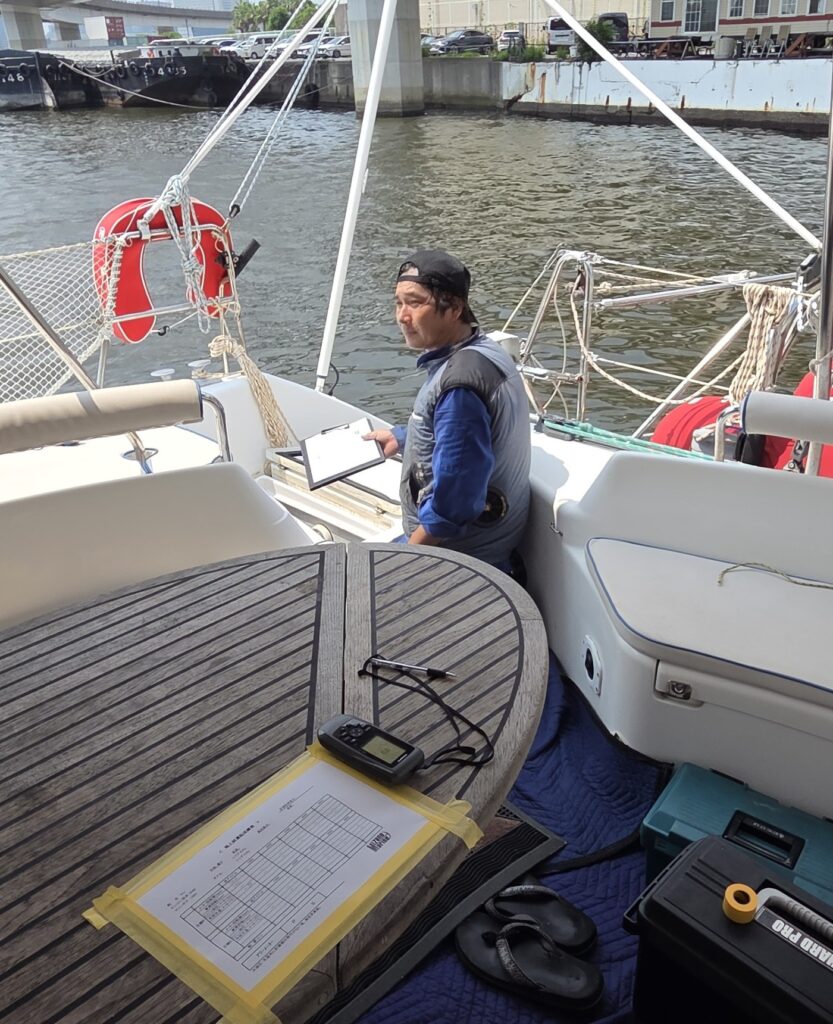
first checks on the STB engine. On the table a checklist secured against wind
On the 22nd, at 0930 the team from the Cotton Harbor Boat Yard came to moved MaRe into the water. The Volvo technicians were on board and we departed for the sea trial. They had checklist prepared. We increased in steps the RPM.
Then suddenly again white “smoke”, steam, came out of the PRT exhaust. Not enough cooling.
Another observation was that not enough seawater came out of the PRT muffler.
We went back to pier and they checked the impeller of the raw water pump which was not replaced during the maintenance. It turned out that there was a one blade had fissure which reduces the raw water (seawater) cooling water.
The steam disappeared but the amount of seawater coming out of the PRT exhaust was not enough. Especially at higher RPMs this was clearly to be seen.
As it was considered that the sea trial only takes an hour and we are back by lunch, an old friend from the days of the Kenwood Cup in Hawai came by. Nakanishi-san was at Kenwood in charge of organizing all and especially the media. That why Makiko worked for him in the press center during the biannual Kenwood Cup days. It was good seeing him again still being and good shape and working still a few month a year using his media connections. The boat yard people welcome him very friendly and offered him to place in meeting room where he could relax from the heat of the outside temperature being close to 40 degC. Unfortunately of the problems with the PRT engine I could not talk as long as wanted with Nakanishi-san. When Makiko arrived I needed to go back to the boat.
The technicians exchanged the raw water pumps between the two engines. On STB, the full amount of water came out of the muffler, but not in PRT. So the raw water pumps are not the cause.
A few other test were made and then it was decided to connect the PRT engine’s raw water intake to the genset’s raw water intake. Result, a full flow of water came out of the PRT muffler. A few other test were made and then it was decided to connect the PRT engine’s raw water intake to the genset’s raw water intake. Result, a full flow of water came out of the PRT muffler.
The Volvo technicians called their management and got approval to continue working. So they talked with the boat yard people. The full team got back to lift MaRe again out of the water.
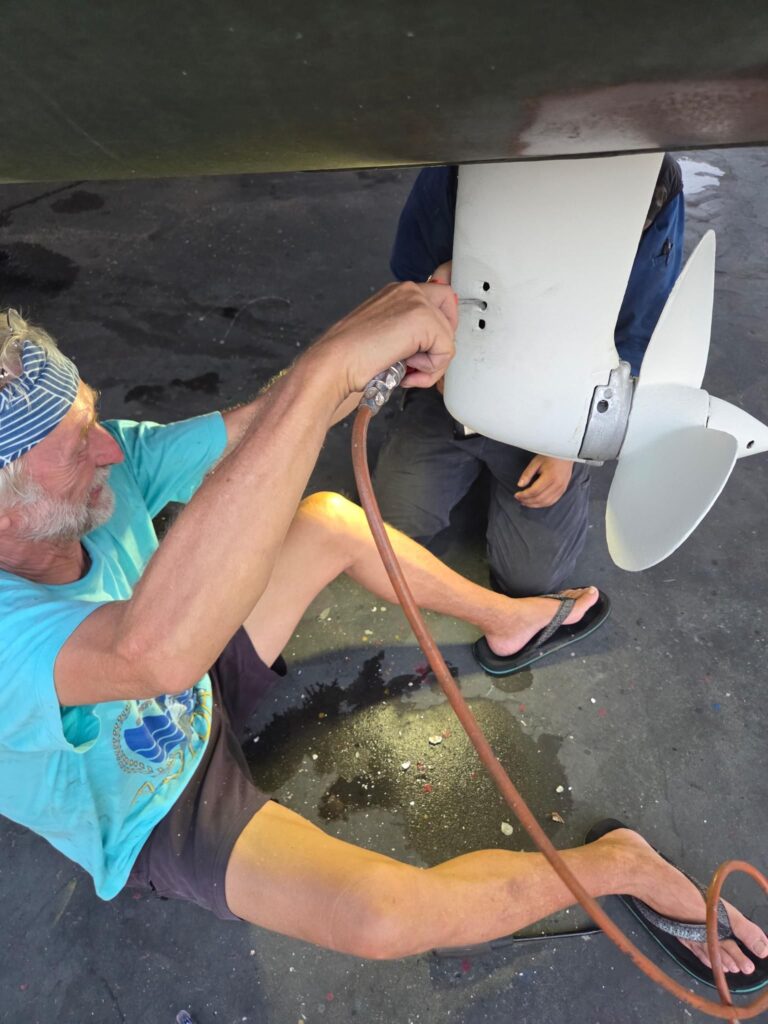
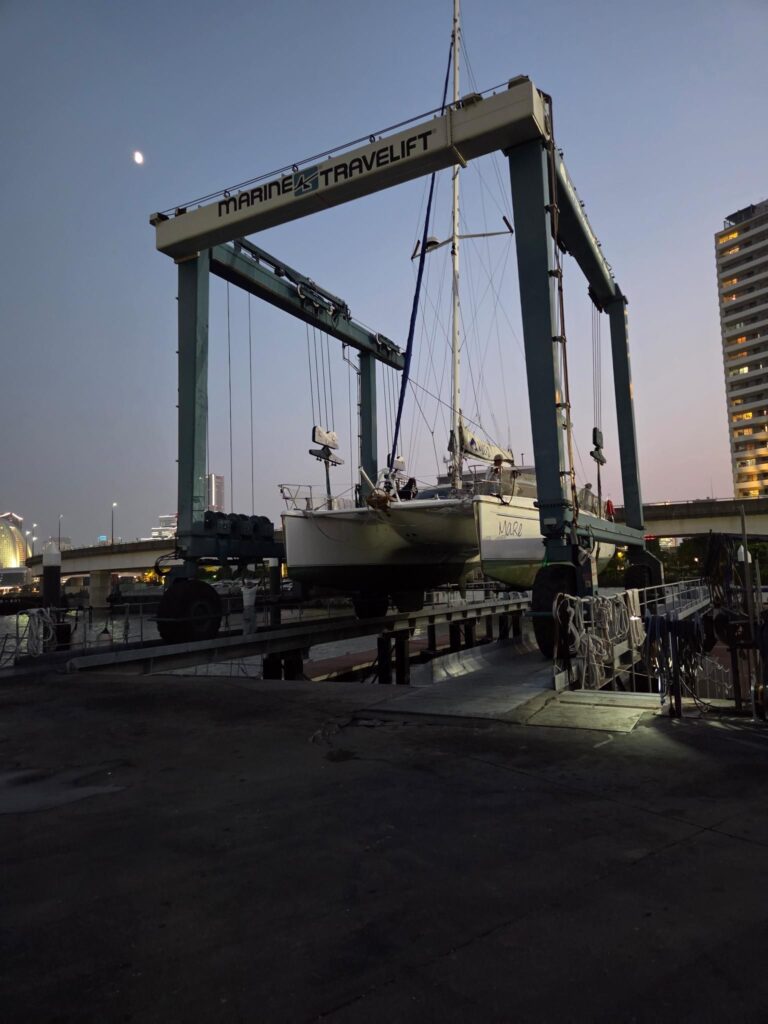
MaRe, still hanging in the traveler lift belts it was found that a shell got loose from the inner side of the sail drive and was sucked up with increasing RPMs to the entrance of the raw water pipe inside the sail drive and reduced the water intake flow. With a screw driver the shell could be broken into pieces and the debris where flushed out first with pressed air and then with fresh water from a hose connected to the first raw water hose of the cooling system.
removing debris of the shell, which blocked the the entrance pipe of the raw water circuit
the culprits, small pieces of a small oyster shell
MaRe was launched again into the water. Starting the PRT engine, showed the full amount of sea water came out of the PRT muffler. Successful repair!!!
the very late re-launch after removing the shell debris
We moved MaRe to the pier where she could be docked until departure to Arari bay. There, the technician finished the PRT engine by removing all cooling short cuts for testing, replaced the fresh water of the inner cooling circuit with coolant and cleaned up all. We all were exhausted but happy the sea trial could be completed successfully.
This event showed me what I was years afraid of since years. The design of the raw water intake for the Volvos via the sail drive it not as good as it should be. Either the design of the inlet at the sail drive housing needs to be changed or a separate hull-through would be needed. Fortunately I have a deck wash pump, which – if needed – can be used to flush a sail drive in the opposite direction to get debris of shells out while MaRe is in the water and cannot be lifted out.
When I wrote “Poseidon” I thought, I need to have a look at the Japanese mythology and who are the gods who need to friendly to us on our way to Arari bay.
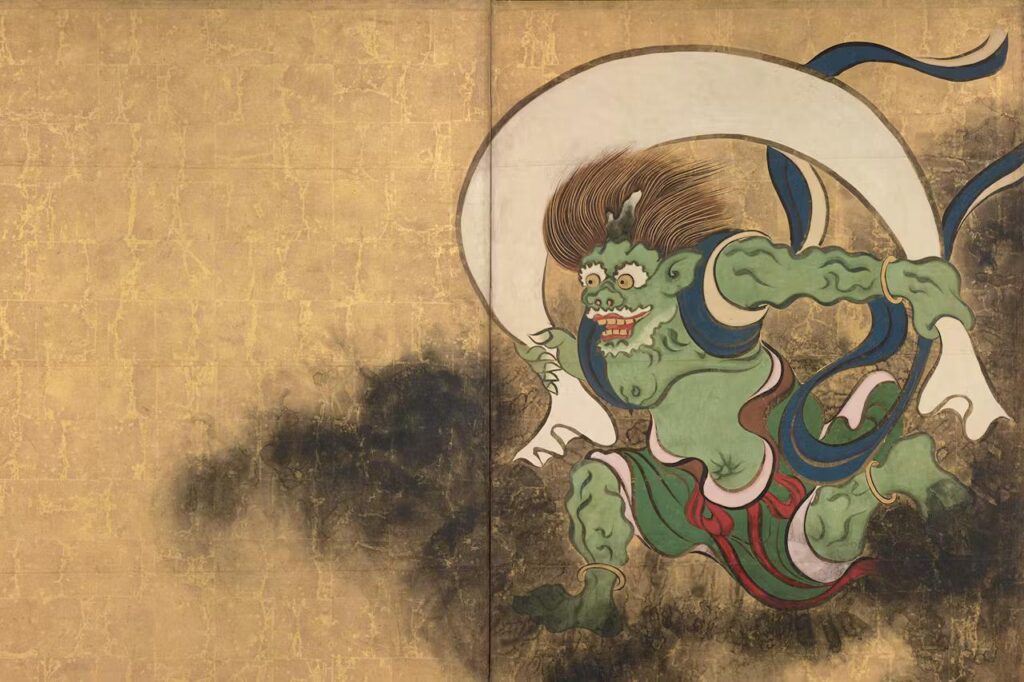
Fujin – Japanese god of the wind, frighteningly powerful and neither good nor evil
Fujin (風神) is the Japanese wind god, a powerful elemental deity whose bag of air moves all the winds of the world. … Fujin is neither good nor evil, although he is often a destructive force.
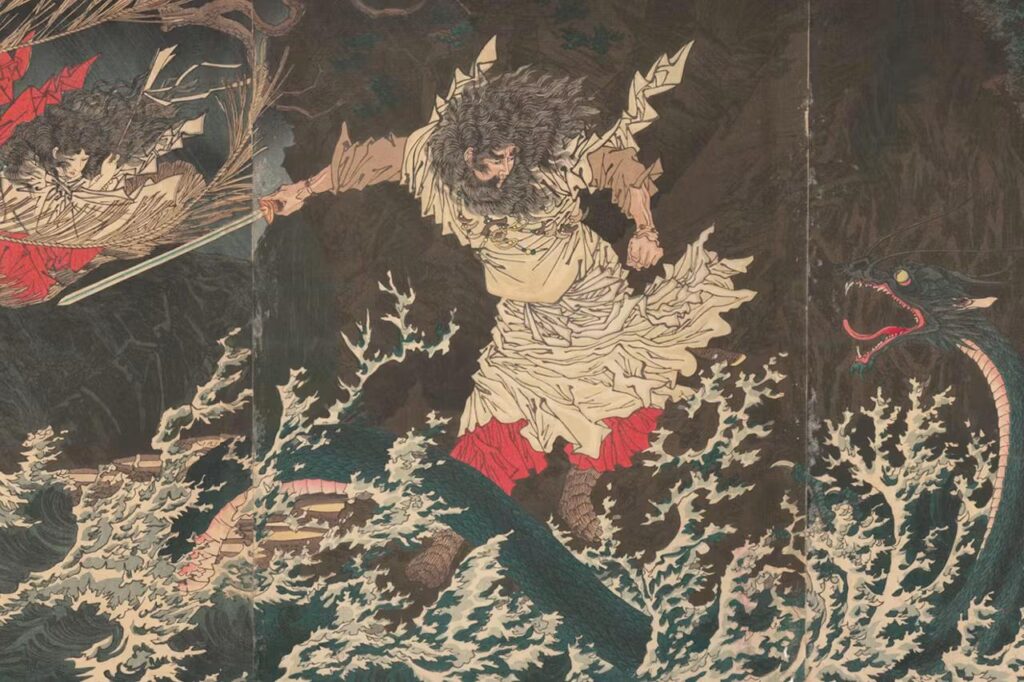
Susanoo – Tempestuous Japanese god of seas and storms
Susanoo-no-Mikoto (建速須佐之男命) is the Japanese god of the sea and storms. A powerful and boisterous guardian kami, Susanoo’s moods are often as temperamental as his actions are chaotic.
Hoderi is the kami (a type of Shinto god or spirit) of the sea and fishermen. Although he once had power over all the fish in the sea through his magic fish hook,… (For Hoderi there are no Japanese characters given and no picture is shown.)
(Above text in italics is from aforementioned source.)
Who is now in charge of us when sailing in Japanese waters?
Hoderi I think we need to please when we troll to catch fish. Looking at Fujin and Susanoo I feel, we better please both of them and ask for favorite winds. Let’s see. I will drink a glass of Sake tonight on their health, I hope it will please them and the wind gets better as it looks now.
I am checking the wind development for the 25th and 26th already daily in my normal 4 wind models. Sure its still a week to go, and everything beyond 3 days is as good as crystal ball gazing. However, I get a first idea and see how the wind forecast stabilizes in the next days until departure. When all models stabilize in the same trend the chance to get this wind is high. Otherwise, I will see what Fujin and Susanoo will provide.
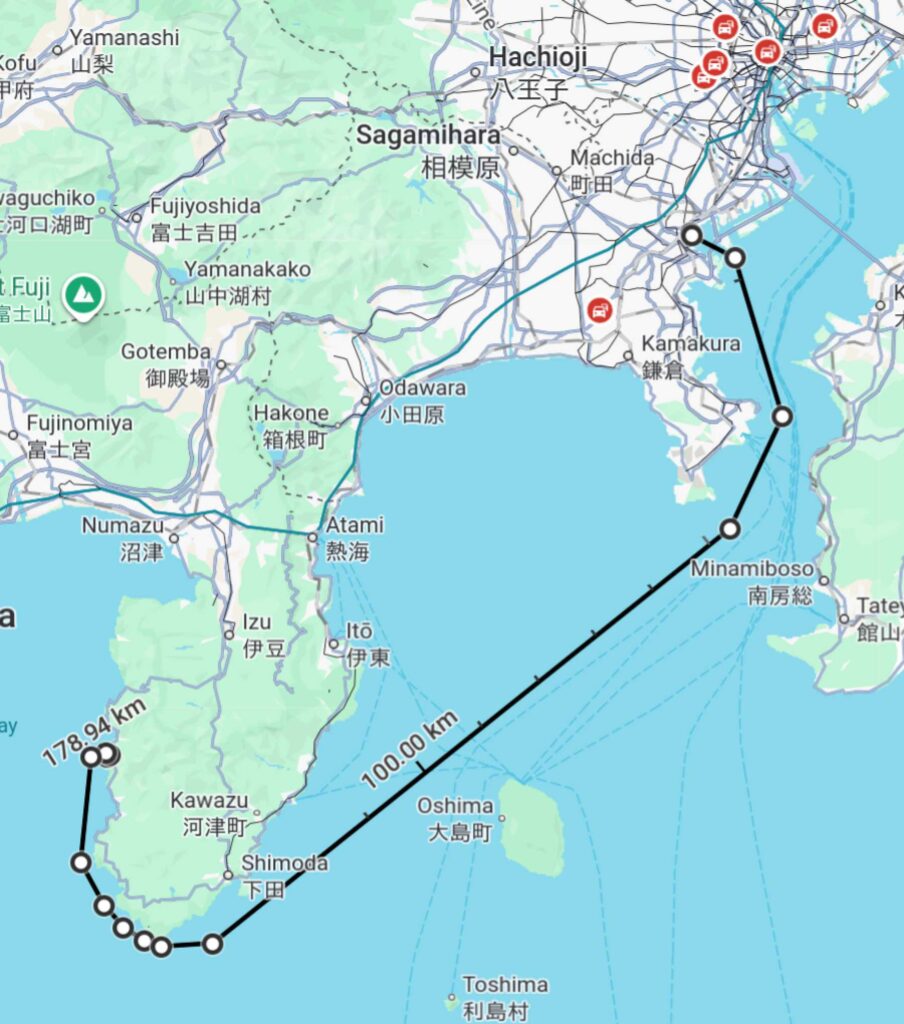
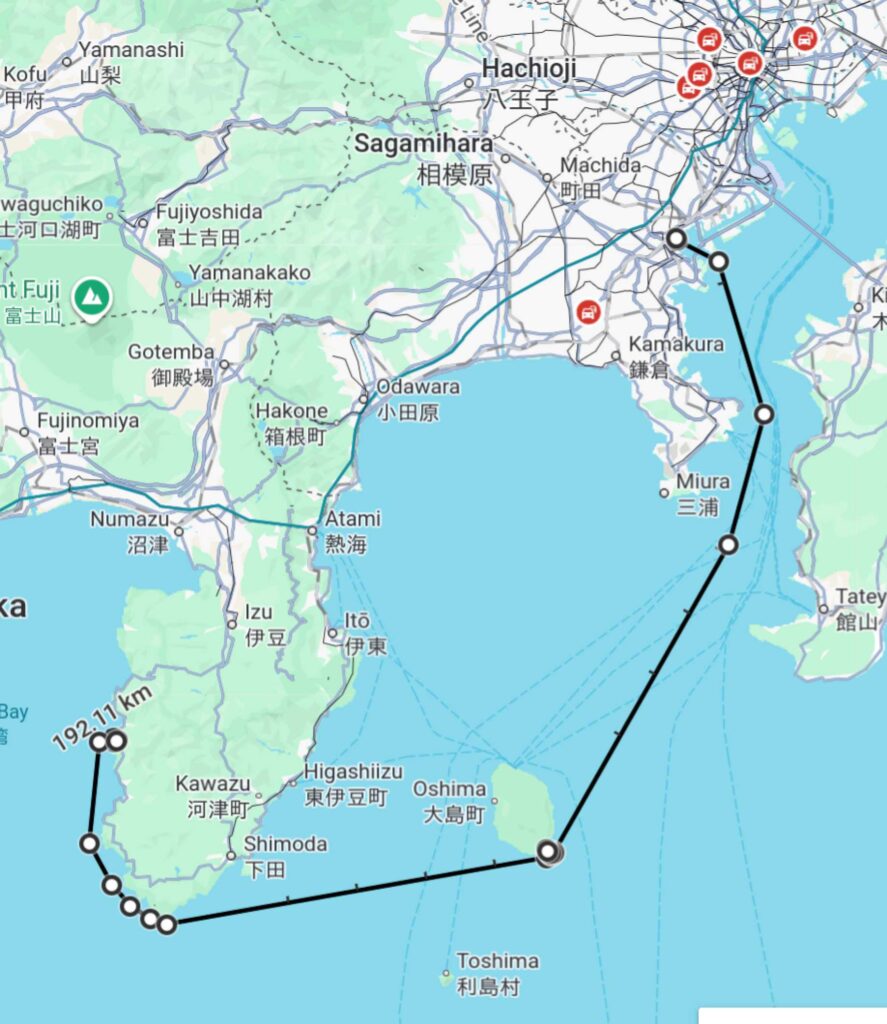
Basically there are two routes. The direct one, which takes about 20 h and the one via Habu port of Oshima Island where we stayed before. Going via Oshima would mean an overnight stay there and continue the following morning.
the direct route from the Yokohama Cotton Harbor Boat Yard to the Arari Shipbuilders
(source: Google Maps)
the route via Oshima requires an overnight stay in Habu port of Oshima where we docked on the way to Yokohama for a night.
(source: Google Maps)
As it looks right now the direct route looks the best because the wind is pretty weak and its direction is not in favor for the Oshima route.
For the direct route we will cut off the lines at 10:00 on Saturday and have an ETA of 11:00 on Sunday. Roughly a 24 h sail with crossing the Sagami Bay during the night.
How will the wind develop? the answer to this question allows the answer to which route to take.
Last Friday, the Volvo guys completed the re-assembly of the engines, and started the engines for the first time after the maintenance / overhaul. Although the STB engine took its time to start – it complained about air in fuel pipe – it ran as always after the lines were bled.
On Saturday, the Volvo guys came again and flushed the coolant system thoroughly and filled in new coolant.
Now engines and saildrive are ready for the relaunch and doing the sea trial of the engines and propulsion system.
I talked to Yoshida-san, the yard manager. He confirmed with the Volvo guys that the sea trial is now scheduled for the 22nd.
Once the seat rial is finished, I can stay at MaRe being docked to the boat yard’s pier final departure preparations. I want to depart on the 25th towards noon.
I will go to a floating pier of the Arari Ship Builders, located in the Arari bay, on the west side of the Izu peninsular. This very friendly company offered me a place to keep MaRe and work on her until I depart in November.
I recently wrote to a very special good old friend, “The contrast between Tokyo and those tiny, poor – but still so rich – islands in the South Pacific is huge.”
Now, I need to get used to Tokyo again. Tokyo is the metropolis I lived in for more than half of my life.
I will probably now, after having sailed so many miles in remote islands’ waters, I will never get used to the plastic waste – or rather the madness of plastic packaging – in Japan.
The years I have left won’t be enough for that.
While still on board in Chichi-jima, the main island of the most southern group of Japanese islands, we produced about as much plastic waste in three days as we used to in an entire month on board MaRe while sailing between the Southern Pacific islands
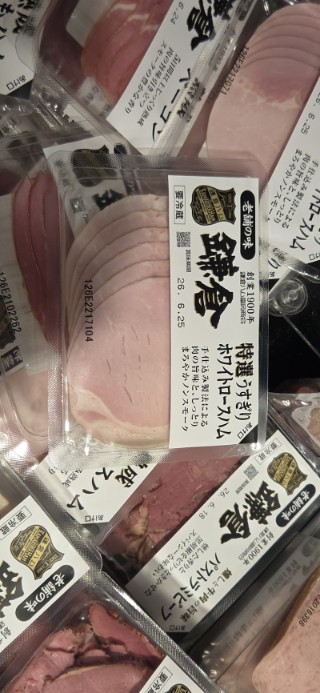
My OBM recently bought thinly sliced sausage. 4 slices are packed in plastic; in the shown picture, there are six slices.
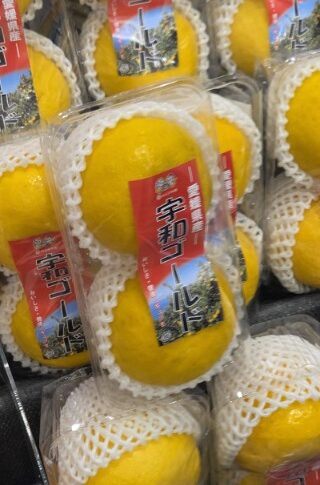
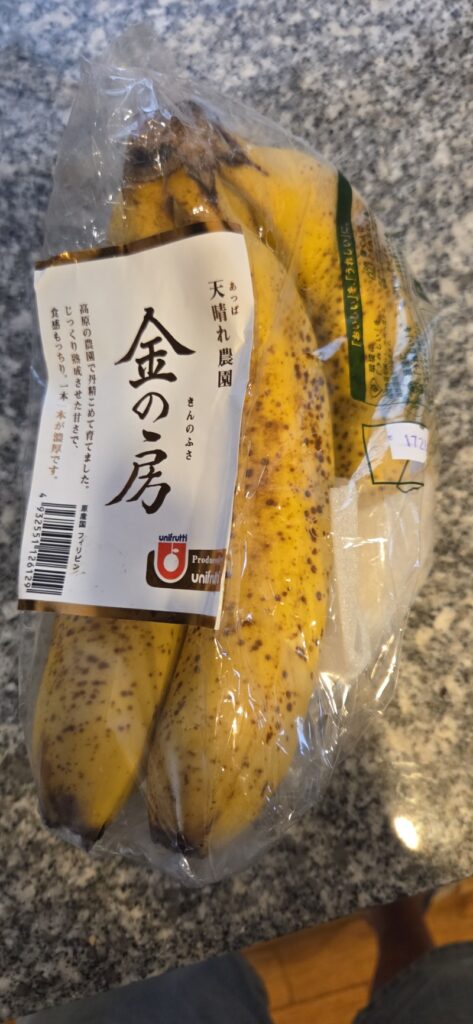
Fruits and vegetables are packed in plastic. Convenience, thus waste of raw material and energy connected with environmental pollution is the driver here. It seems to me that rich countries’ people love this and the governments don’t care because they want votes.
six slices of ham packed in plastic
I wrote “countries” because my daughter, cautioned me that I Holland it is the same. I wonder what I will see in Europe when I arrive there by the end of next year.
each single piece of bell peppers is plastic packed
On Pohnpei, Micronesia, shop assistants where also quick with putting all in plastic bags but there we could avoid plastic by putting things in our own backpacks or shopping bags which I carried always in my backpack. There the plastic madness starts.
But I wonder even more how I personally will cope with this plastic madness in Japan and possibly in Europe.
Already in the Caribbean, I got the impression that this globe, the only one we have, will drown plastic garbage. Seeing all the trash drifting ashore there made me pretty sad.
Tokyo – I go around on by my bicycle, by busses, subways, trains, and car almost as before the departure for my looong sail, but I don’t know yet what I feel and think. I’ll see.
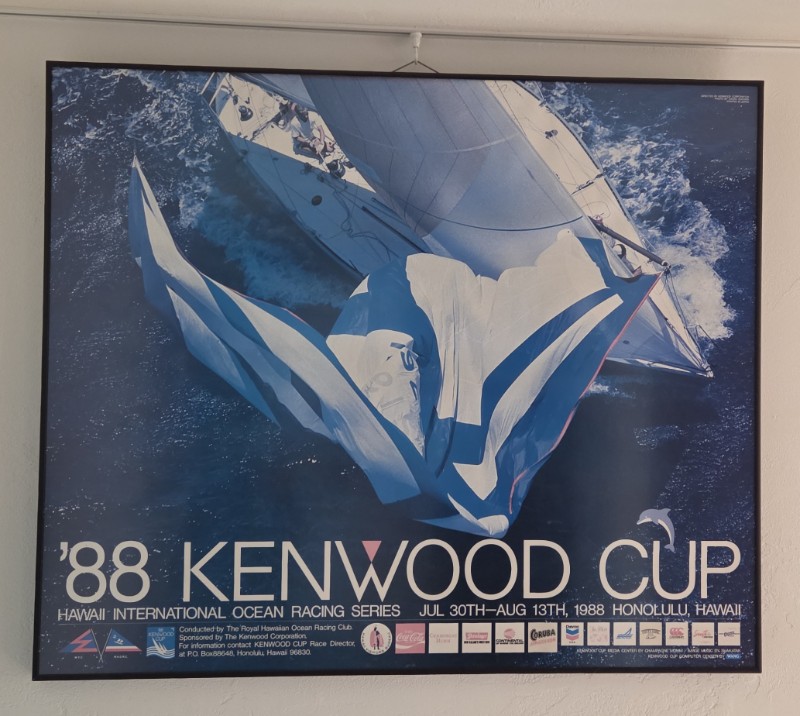
I mentioned already a few times the 12 m race boat “sleeper” on which I was a crew member in the 90s.
“sleeper” featured on the poster for the 1988 Kenwood Cup hanging in the entrance hall of our home
Yesterday we had a small reunion on board of MaRe being in maintenance mode and on the hard. Not the most beautiful place for a reunion but one with very good feelings and lots of talks about what everybody remembers.
It was Taro-san, who OBM and I invited originally. However, he is in touch with Kohama-san and brought him along. So we had a wonderful small reunion. Last time we met Taro-san in 2021 at our place in Tokyo, but Kohama-san we met the last time in the mid to the end of the 90s.
We decided that we will sail along together when MaRe is back in the water and that we have another reunion with the crew members Taro-san is in touch with including Takebe-san the wife of the one of the late owners of “sleeper” once MaRe floats in the water I’m at the place of the Arari Ship Builders.
We also set-up a Signal messenger group to stay in touch with each other.
I’m now curious who will come to the next “sleeper” reunion.