Category: 2026

for all post of 2026

  • 260518 Home in Tokyo

    260518 Home in Tokyo

    I’m back home at our home in Tokyo, and MaRe is at Yokohama Cotton Harbor Boat Yard on the hard.


    10 days ago, on the 8th at exactly 1200 we arrived at boat yard. I didn’t believe myself that we made it exactly until the ETA announced in the early morning hours by email to the boat yard.


    At the beginning of the night sail we had incredibly good winds. See the previous narration.


    Already during my watch, the wind weakened. All night long the winds went down to 1-2 Bft – which is no sailing wind at all – for several times and increased again. Normally, outside in the open sea, I get the sails down and drift until the wind comes back. In this night, I used the engines for two reasons. First, for safety reasons. We were in the vessel highway into Tokyo Bay, and later in the Tokyo Bay. There is quite a lot of traffic in this area. This traffic can require quick movements out of the way of priority vessels. Second, we needed to reach the boat yard early, to have enough daylight to get MaRe out of the water. So until our arrival at the boat yard we sailed and motored depending on the wind to always have a propulsion for immediate maneuvers.


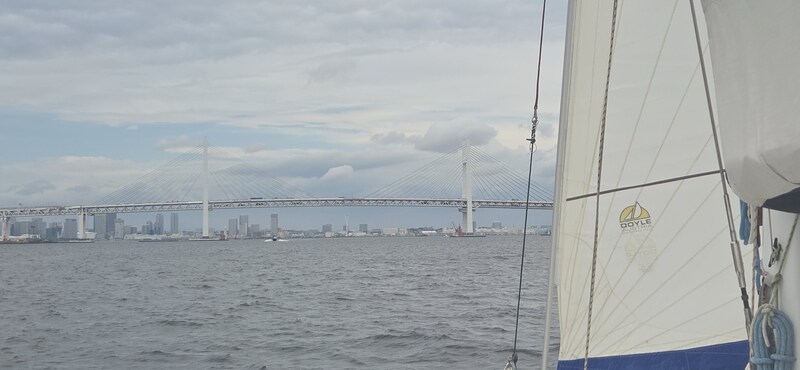
    Then was the famous Yokohama Bay Bridge already ahead of us and the wind was stronger again. I was attempted to sail under the Yokohama Bay Bridge, but didn’t want to ask a crew member for another unfurling of the genoa, just for the last 2-3 NM. When Tobi came out into the cockpit and looked at the huge bridge ahead of us, he suddenly mumbled that it would be nice to sail through under the bridge. Two minutes later MaRe was sailing again.


    It was a bit impressive to sail under this 65 m high bridge I used often when living in Tokyo. Actually, when the bridge was just opened, good friends, Debbie & Ian, took me with them for a ride over the Yokohama Bay Bridge on a Sunday. We stopped at the side lane and had a view from this brand new bridge.


    After the bridge was just behind of us, we looked out for the final point, the dock of the Cotton Harbor Boat Yard. Having the coordinates in the chart plotter is one part, the other is to recognize the spot. When the genoa was furled and we were running with the engines, Tobi recognized the big signboard ahead, and I saw some people standing at a floating pier in front of the channel for a traveler lift. I waved and they waved back. This was the confirmation that they were the people looking us and we were looking for them.


    The docking was smoothly and we were asked to wait a bit. No problem at all. We arrived. For me it was the end of my almost 5 year looong sail from Europe to Japan.


    Before MaRe was hauled out, we needed to leave the pier for a short time so that they could launch another boat, hanging already in the traveler lift. Then it was our turn. Carefully, the haul out team pushed and pulled MaRe into the traveler lift channel and positioned the belts at her bulkheads.


    When we were just hanging in the belts up in the air, my OBM arrived. It was nice to see her again life and not only in a Signal video call. The officers from customs were also waiting…


    I think I’ll write narrations about the time I spent in Tokyo, traveling forth and back from home to MaRe to do the work I need to do in both places.
  • 260507 MaRe runs! She runs home!

    N 34° 46.912
    E 139° 31.150


    At 2330 we were out of Oshima Habu port.


    The way out was extremely difficult because of the poor cardinal signs, no clear red and green markers. Additionally the white lights at the shore. Tobi was at the bow to check the distance to shore, I used also the track of the way in to get out. Finally I saw the yellow light marker of the outer breaker wall. I felt relieved.


    When we were out we immediately hoisted the genoa and I set track mode at the auto pilot. Tobi and Shigeo are sleeping.


    It’s my first watch tonight. MaRe is on course directly to the first AIS marker at the entrance of Tokyo Bay.

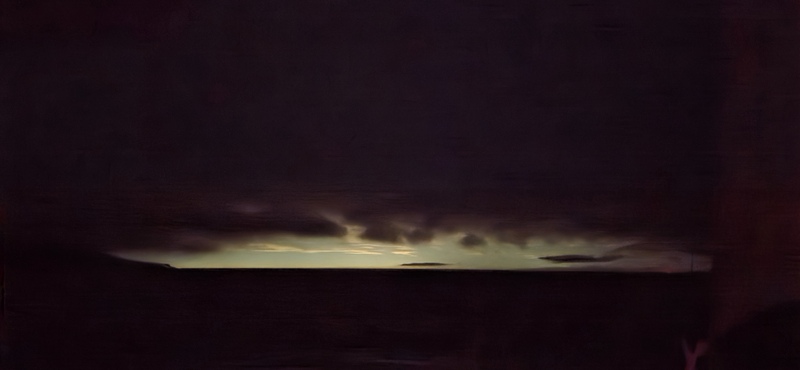
    In front of us the clouds are illuminated by the light pollution of Tokyo, Yokohama, Kawasaki to mention only the three major cities. I never saw such a light pollution.

    The coast line of the Izu peninsula is dotted with white lights. I remember when I sailed at night as crew of the 12 m race boat ‘sleeper’ along the Japanese Pacific coast how difficult it was to identify the lighthouses in the sea of lights to determine our positions.

    Gosh, GPS navigation is so easy!

    And MaRe runs! She feels that I want to see my OBM again. Between 6-8 KN STW. Waves of about 2 m from astern. Wonderful smooth sailing.

    ETA Tokyo Bay currently 0415.

  • 260506_02 Safely docked in Oshima

    260506_02 Safely docked in Oshima

    N 34° 41.297
    E 139° 26.203

    The Habu harbor of Oshima is basically a natural bay with all the shore covered with walls that many vessels can dock like in a harbor.

    High remnants of a former caldera protect the harbor from winds excellently and fully covered with lush green. The breaker walls at the entrance make sure that no swell is rolling in.

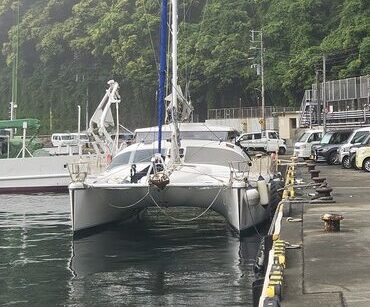
    We docked at the NW part off the pier. Our neighbor yacht’s crew finally took our lines after Tobi asked them if they kindly would fasten our lines at one ring and one pollard. They did it but then Tobi jumped on land to tie up the lines correctly. One was just laid around the polard….

    At 1310 we were properly docked and I switched off the engines.

    I sent the new ARR documents to customs in Tokyo. I did so by taking the ones for Hachijoshima changed the days and arrival and departure place name.

    Now I want to rest a bit. It’s 1500 already.

  • 260506 20 NM to Oshima

    My youngest grandson will now say “Opa gaat weer stuiderballen”, which means “grandpa jumps like a super ball to another island”.

    Indeed I “jumped” in an overnight sail to (almost) Oshima. The wind was almost like forecasted. A bit weak in the middle though. At the beginning the ride was a pretty bumpy one.

    In this season, in these latitudes it is impossible to find a good weather window for more than 24 hours. Our weather window is open only for 20 h. Before and thereafter either no wind, or the wind on to the nose, or storm. So, the next jump to Yokohama will most likely be on the 8th with a departure at 0200 in the morning to make it in daylight to Yokohama Cotton Bay Boat Yard where will go on the hard for a replacement of the shaft seals of the sail drive. Thanks to OBM who found that boat yard.

    During the night I found a Japanese fishing boat, which switched off the AIS to be undetected, but a bit to late, I just could recognize the first 3 digits of the MMSI, which shows the registration country. We were so close to this Japanese boat that I could recognize it as fish boat without binoculars. Fortunately it got off of our course line pretty fast when came closer.

    It also seems that these fishing boats made of fiberglass, don’t use radar reflectors. No reflection signal at all on the radar screen.

    What is kind of interesting is to see how many cargo vessels are adrift around Oshima. Do they wait for permission to enter Tokyo Bay? However, there is not much traffic at the entrance of the bay. Another reason could be that the pier for docking is not yet free. Maybe I can get in the next days some information.

    For now I keep fingers crossed that we can keep the indicated ETA of 1100. 15 NM to go.

  • 260502 Mount Fuji of Hachijoshima

    Hachijoshima is an island, which was created by two volcanoes so close to each other that there is land connection between them. This is main flat part of the island; the airport is build in the middle.

    One of the volcanoes is called “Hachioji Fuji”. A road goes up to about to 650 m. From there we ascended to the top at 850 m. The way up with stairs gave an increasing good view down.
    When we finally reach about 800 m the wind blowing strongly. The gusts were about 30-50% stronger.

    The view down was nice. In the harbor we saw MaRe docked at the pier. Outside at the sea, white crusted waves. Not looking that comfortable to sail.

    At a somehow wind protected spot we sat down and had our lunch box. I had rolled sushi with “negitoro”. “Toro” is the fat part of a tuna’s belly, finely chopped and mixed with chopped “negi” (onions). I haven’t eaten them for 5 years…

    Quiet some people made it up to this height. Younger ones in their twenties, but also elderly people, like a lady most likely in her late 70s.

    After lunch Tobi and I took the last challenge to go up ro the very top. On the way the gusts were sometimes so strong that we stopped walking to hold on bushes and shrubs.

    When we reached a point being maybe 2-3 m lower the real top, but another 400 m away, we called it good. The gusts I guessed to 40 KN (~75 km/h). There was no need to make these last metres in this wind.

    After being down at the lunch place, Shigeo had gotten information about a trail, down into the crater to a tiny little shrine and a good view into the steep part of the crater. We took the trail, reached the tiny shrine, consisting of two “toriis”, the gate like looking structures leading to a shrine. The real shrine there was just a place unvisible as the gods.

    We had a look into the crater and saw, we were at the edge of the vertical wall down into the crater. The interesting thing of this crater is, it contains a small volcano inside. Maybe the final eruption of the volcano. It was fully covered with trees, bushes, and other vegetation.

    Then we went back. The way down a volcano is always the same. A boring decent and puting some strain on the knees. But here it is only a 200 m decent. Fortunately.

    Back at MaRe, dinner, and sleep.

  • 260501 A first drive on the island

    The main thing of the last days was the very strong wind we got. We had gusts of often above 30 KN in rare cases wind speed of 40 KN was displayed. We spent most of the time inside.

    However, we also could go for a drive at the island. Shigeo found some spots at which we looked.

    First we went into a botanical garden. Typical Japanese with well prepared narrow roads to walk on. The plants along the small roads cut back. “The park is treated like a bonsai”, was a thought, which came to my mind.

    On a nice view point higher up giving a great view over a bay, we ate our typical Japanese lunch boxes. We bought them along the way at a supermarket. All of us bought the same. Sushi with marinated tuna, an island specialty as we leaned. The taste was good and the stomachs filled. But when I looked at the amount of garbage, which was left over I felt a bit sad.

    When we continued our walk to the Visitor Center, the well prepared road was suddenly blocked. The way ahead was not yet so well prepared, thus we should not walk on the for us perfectly fine. We didn’t care and walked down this more natural way to the Visitor Center.

    The Visitor Center had a lot information on all local creatures, plants, and things, which could be of interest.

    A staff was watching us and gave additional brochures. We felt cared and I felt back home in Japan.

    When we entered the next door greenhouse, Tobi commented, “Like in Pohnpei!”. Indeed the temperature and humidity was like 2000 NM further south where left only a few weeks ago.

    The plants we saw in the greenhouse were the ones we saw on all the islands of the Southern Pacific. For me it was a nostalgic feeling, a kind of ḥomesickness to these wonderful island I could visit in the last years.

    Then we took off by car to go to an onsen, a hot spring.

    There are several in the same area of the island. It seems the access to the natural, volcanic heated water is just best in this area. Shigeo had already in advance selected one, so we went there. Tobi entered with curiosity and I felt again home. All was so familiar to me.

    The building from outside and inside. The reception corner to pay the entrance fee, and to buy a towel. I needed one because I didn’t bring one along; it became a memory item and i will use it on board. I like these small these small towels.

    Next shoes off and place them in the shoe shelf along the wall.

    The final entrance was indicated with a “noren” a typical Japanese curtain to block the sight to inside. A big “ゆ” (yu) character on the curtain says that is the way to the ゆ, the hot water. The blue curtain for men, the red one for ladies.

    Inside the room with the typical Japanese lockers, we put our backpacks and clothes into a locker.

    Then into the bathroom. Through it’s glass wall, I saw already my favorite bath, the one outside called “rotemburo”.

    However, first cleaning the body at one of the plenty “sitting-showers”. When I opened the tap and saw the huge amount of warm water coming out, I had to think about the showers on board of MaRe. There we get enough water for a comfortable but it is only a runlet compared to the water coming out of this typical onsen shower.

    With a clean body I went outside in the “bathtub” build with natural stones and great few over the bay below. In one corner the hot water came out of rather thick pipe to fill the basin.

    The first step I did carefully because I know how hot the water can be. Slowly I sat down at the lowest level so the hot water was on the level of almost my neck. Gosh, it felt good and so nostalgic for me. After sitting like that for a few minutes, I got up to the higher level where the chest was out of the water and enabled a bit of cooling. At the end I was sitting on the highest place where only the feet and lower legs were still in the hot water. The view over the bay was magnificent and the feeling of the well heated body was just great. One feels the cool wind on the skin which is heated inside from volcanic hot water.

    After changing the sitting levels several times, I left the outdoor bathtub, took another shower, dressed, and went into the room to rest and relax on “tatami”, Japanese rice straw mats. Five years I could not sit or lay on tatamis. I laid down and enjoyed the comfortable feeling of having been in the hot water for a while and relaxing now on the tatami. What a wonderful end of the day.

    Back to MaRe we had another Japanese meal for dinner. After the typical dinner conversation we went to bed.

  • 260429_02 Visitors

    Yesterday, we made a short drive with the little car we got to the other side of the flat part of Hachijoshima between its two volcanoes.

    But before we took off we stopped at the other side of the harbor basin at the fishermen association to buy a ‘kinmedai’, a type of snapper with gold colored eyes. Our dinner.

    It is my second visit to this island. The first one was in 1991 with a friend from Germany. Now it is like the visit to Chichi-Jima a kind of “first” visit again. Driving or walking through the streets is a kind strange feeling. It’s in one side the first visit again and on the other side I’m feeling at home.

    In the smaller fishing port on the western side of the island we stopped to look around and got in touch with 3 young people – 2 Japanese and a “gaijin” from the USA, teaching English – trying to catch horse makarel.

    We had interesting conversations because one of them is a professional fisherman who works on his father’s boat. He lives on the E side of the island and saw MaRe from his home close to the harbor.

    As they were curious about MaRe, I invited them to come over to MaRe.

    They came yesterday evening when we just finished dinner.

    We talked for an hour over a cup of coffee about boats, MaRe on one and the fishing boat on the side. They were curious about MaRe and I was curious about the fishing boat.

    Among other things we learned, we heard of the first time observation of baby whale in the passing the waters of Hachijoshima.

  • 260429 Sailors connection in Japan

    In Chichi-Jima a 34 ft sailboat was moored behind us. It turned out the sailor is a Japanese sailing single handed. Kazuhide Takao is on his way from Shizuoka, not be far and west of Tokyo, to Nauru, a small island just 31 NM north of the equator, and south of the Gilbert and Marshall Islands.

    Via Guam he wants to sail to Pohnpei as his next stop. So I gave him coordinates of my track through the reef into the bay where were at anchor for more than a month. Topped it up with all information about what I thought can be helpful.

    Also in Chichi-Jima we did some things together.

    He left Chichi-Jima just half a day before us to sail S whereas we headed N.

    Yesterday, he suddenly connected back to us.

    Yesterday we moved MaRe into next inner basin of harbor where no swell is felt. It is a very good place für MaRe especially since we can use two moorings to keep MaRe at a distance to the pier.

    Shortly after we were finally moored, a man came by car referring to his friend Takao-san and said that we can have a car free of charge with regards to Takao-san.

    So we have until the 2. May a little car to explore the island.

    Japanese sailors connection.

  • 260428 Safely docked in Hachijoshima’s harbor

    N 33° 07.916
    E 139° 48.321

    Yesterday we docked at safely in the harbor. It’s a harbor with very high walls and several basins going around several corners to reduce the swell.

    The last part of the approach was actually a tough bumpy ride because we had to sail against the waves at a certain angle to make it to Hachijoshima. The wind turned nicely as forecasted but the waves don’t turn so fast. For the final 2-3 miles part to the harbor, the wind turned a bit too fast and blew around the dead volcano in the south of the island and across the flat part in the middle of the island and made a very choppy sea.

    Docking was a bit tricky because the wind suddenly blew on her from behind. I had to abandon the first attempt to dock because the wind became too strong. With going towards the wall backwards and a stern line to a mooring ring at the wall, I could use the wind to turn MaRe smoothly towards the wall.

    For this maneuver, group of Japanese men from a research vessel gave us a hand with the lines. Thanks guys for this.

    After we were docked, it looked like MaRe is moving a bit much due to the wind we got from astern. But, when the wind was down, I saw that a bit of swell is still in the basin we are docked and this moves MaRe.

    A Japanese yacht in the next basin left yesterday at 1800 and we will take the chance and move MaRe into the next basin today.

    We also had already a first visitor on board. A lady, who was curious about MaRe came closer and took pictures. So we invited her on board for a cup of tea. We had a nice exchange of information.

    Now, we know already about locations of supermarkets and a special sushi restaurant, which makes sushi of marinated raw fish, which is said to be special. I indeed, I don’t recall having ever eaten such sushi.

    As she is also fishing, she gave Tobi some special hooks. I’m curious about what he will catch with them.

    In the afternoon Tobi went into his cabin for a short nap until “next Sunday”.

    After a longer conversation with Shigeo about the next leg I too took a shower and went to bed for a nap until dinner. I didn’t sleep much the last days. Only Shigeo was awake because he got enough sleep before.

    So for dinner Shigeo made yakisoba, a very Japanese style of fried noodles with vegetables and a bit of pork. It just was wonderful that to get such a delicious dish again.

  • 260426_02 Approach to Hachijoshima

    N 31° 44.245 E 138° 49.136

    It was clear that we can’t make it into the kaminato-gyokou, the kaminato-fishery harbor, with an approach from S. The wind would not turn S in time.

    The first thought is to go around the northern part of the island. This could become tricky when we have to head south because by then the wind must be expected to blow from a very southerly direction directly on our nose.

    I already slowed down MaRe while looking into the possible approach. However, MaRe can not be slowed down enough.

    So the idea was born to not slow her but to stop her and have a comfortable time on board for breakfast, a rest, a lunch, and then continue sailing.

    Stopping MaRe at about 4000 m water beneath the keels is easy.

    We prepared for the maneuver, turned her bows through wind and were in a comfortable heave-to position. In this position, the genoa is backwinded, the main sail points down the wind, and the rudder is fixed to work against the forces of the genoa. This way MaRe is parked in the middle of the ocean. The waves’ effect is reduced due to the direction MaRe has now against them. Additionally, seduces the turbulence of the hulls and keels the waves rolling on top her from the windward side.

    We had a comfortable breakfast, I took a nap because yesterday was a bit tough on me.

    After a very delicious Japanese cuisine lunch – shoga yaki with udon (pan fried meat with cabbage, onions, and ginger with thick Japanese white noodles) – I started calculating a weather routing. The result was that we can start sailing again. The wind came already from 110-120 deg. So we woke MaRe up. She felt so comfortable in the heave-to position that she also took a nap.

    We set course and were surprised to see that the wind turned back to 85-95 deg. A 4-letter word escaped uncontrollably from my mouth.

    Carefully, in several steps I reduced the wind vane angle to counter the wind direction. We also reduced the speed a bit and are sailing now not to far west from the calculated course.

    Curious about what the wind will do during the night?

    Maybe, I have a talk with the monkey with the tin tool.